

What the Federal Budget Means for Property Buyers Right Now
The 2026–27 Federal Budget has brought some major changes to the Australian housing and property investment landscape. And if you’re a buyer, whether you’re buying your first home or growing a portfolio, this is worth paying close attention to.
Negative Gearing Is Changing: But Not Yet
From 1 July 2027, negative gearing for residential property will be limited to new builds only. That’s the hard start date. But the timeline has three distinct phases buyers and investors need to understand.
Properties acquired or held before 7:30 PM AEST on 12 May 2026 (Budget Night) are fully grandfathered. These are entirely exempt from the new rules and can continue to be negatively geared indefinitely, with no changes to how deductions apply.
If you purchase an established property between 12 May 2026 and 30 June 2027, you fall into a transitional grace period. You can still claim negative gearing deductions during that window, but they cease from 1 July 2027 onwards.
From that date, negative gearing on established residential property disappears entirely for new purchases. Only new builds will qualify.
The CGT changes land at the same time. The existing 50% CGT discount is being replaced with cost-based indexation and a minimum 30% tax rate, which reshapes the long-term return calculations for property investors, particularly those holding established assets over many years.
New Builds Are About to Get More Attention
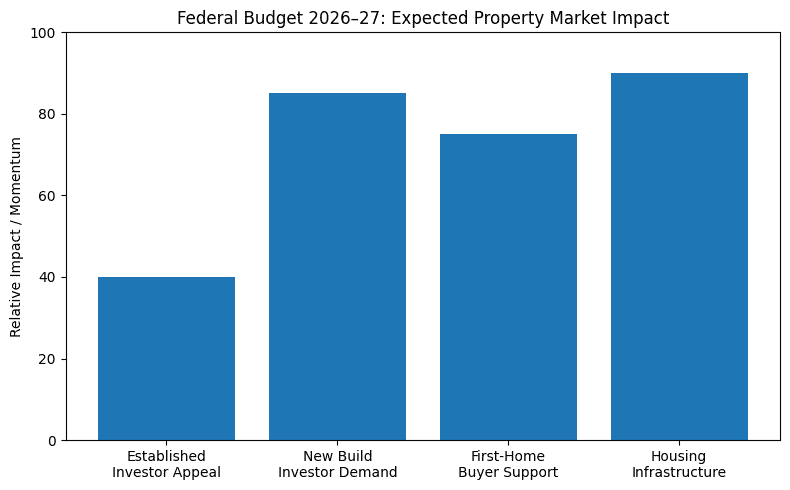
With negative gearing shifting toward new construction, a wave of investor interest is likely to follow. Developers and off-the-plan projects stand to benefit as investors seek tax-advantaged opportunities. If you’re a first-home buyer or a buyer-occupier eyeing a new build, be aware that you may face more competition in that space than you did before.
That said, the Budget has committed $2 billion toward housing-enabling infrastructure; roads, utilities, and the kind of development backbone that makes new suburbs liveable. This is good news for growth corridors on the fringes of major cities. It could also support long-term price performance in areas set to benefit from this infrastructure spend.
First-Home Buyers Get Some Breathing Room
The reforms are expected to support around 75,000 first-home buyers, a number that reflects the government’s intent to ease entry-level competition from investors in the established property space. The Budget also includes expanded access to the Help to Buy shared equity scheme, with higher income and price caps to help more Australians get a foot in the door.
KPMG’s analysis of the Budget confirms increased income thresholds and price caps, broadening eligibility for the scheme, giving more buyers access to government co-ownership on new and existing homes.
Ready to Make Your Move?
The property market doesn’t pause for policy changes; it adapts. And the buyers who come out ahead are usually the ones who took the time to understand what was shifting and moved with intention, not guesswork.
At Investmate, we work with buyers every day to navigate exactly this kind of market complexity.
Feel free to call us at +61 421 942 049 or book a free consultation today. Follow us on Instagram and LinkedIn to stay updated.
