

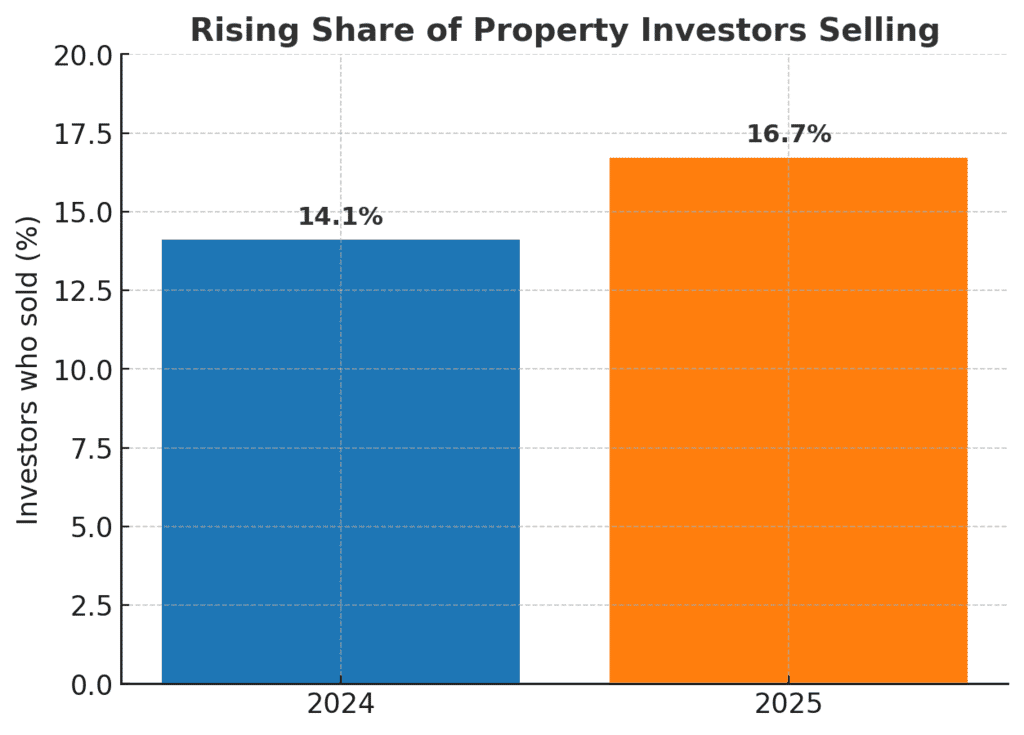
Australia’s landlords are under pressure. A recent PIPA survey reports a record 16.7% of property investors sold at least one property in 2025 – up from 14.1% in 2024. Faced with rising land taxes, compliance costs and policy uncertainty, many long-term investors feel the risk now outweighs the reward. In plain terms: they’re eager to sell. For buyer’s agents and home-seekers, that’s welcome news. More sellers on the market means more choice and leverage for purchasers.
Why Investors Are Selling
Key factors behind the sell-off include higher costs and fear of future taxes or regulations. According to the survey, the top reasons cited by sellers were:
- Land tax hikes: 32.9% of existing investors wanted to offset new land taxes and government charges. Ongoing tenancy reforms (especially in Victoria) also add to the uncertainty.
- Policy fears: Over half of investors (53%) say they would stop buying if negative gearing were restricted, and many would exit if the capital gains tax (CGT) discount were cut. In short, talk of tax reform is spooking landlords.
- Regulatory changes: New vacancy levies and rental laws have left many feeling it’s just too risky to stay invested (as one industry chair noted, some investors now see “no longer worth the risk or cost to hold property” in certain states).
These pressures aren’t just on paper; long-term holders are cashing out. Most sellers have owned their properties for many years, and with costs up 11–41% in recent times, they’re choosing to leave the market while they can.
What It Means for Buyers
The silver lining is clear: more sellers bring more deals. Increased listings give buyers a wider pool of homes to choose from and stronger negotiating power. For example, Queensland and Victoria are seeing the most investor exits – 35.5% and 30% of landlords there sold at least one property – so buyers in those markets now have extra stock. In contrast, Sydney’s investor sell-off has fallen to just 6.3%, meaning less competition from landlords in Australia’s most expensive city. These regional differences create distinct strategies: a buyer in Melbourne or Brisbane can shop a glut of new listings, while a Sydney buyer faces fewer investor homes but can still tap owner-occupier stock.
- More stock: Every investor sale adds inventory. Home hunters will find more houses and apartments coming up for sale than usual.
- Bargaining power: Motivated sellers often set sharper prices or terms. With competition among buyers lower, you can negotiate more aggressively.
- Strong rental outlook: Even as investors exit, most remaining landlords aren’t dramatically hiking rents. In fact, 65% of landlords passed on only 10% or less of cost increases to tenants. That suggests demand is holding up fewer rental homes hitting the market (once an investment property is sold, it rarely re-enters the rental pool), which means tighter supply. In turn, rental yields for new landlords may improve.
How Buyers Can Take Advantage of the Shift
In practice, this trend should make your search easier. Work closely with a buyer’s agent who knows the local markets. We can alert you to listings coming from investor sell-offs and help structure offers with confidence. For example, knowing which suburbs have the biggest supply increases (e.g. certain Brisbane or Melbourne areas) lets you focus there, while also watching Sydney’s market for steadier competition.Ready to make your move? Contact Investmate for tailored buying advice. Call us at +61 421 942 049 or book a free consultation to discuss your strategy. Our experienced buyer’s agents will guide you through these changing market conditions and help you secure the right property for your goals.