

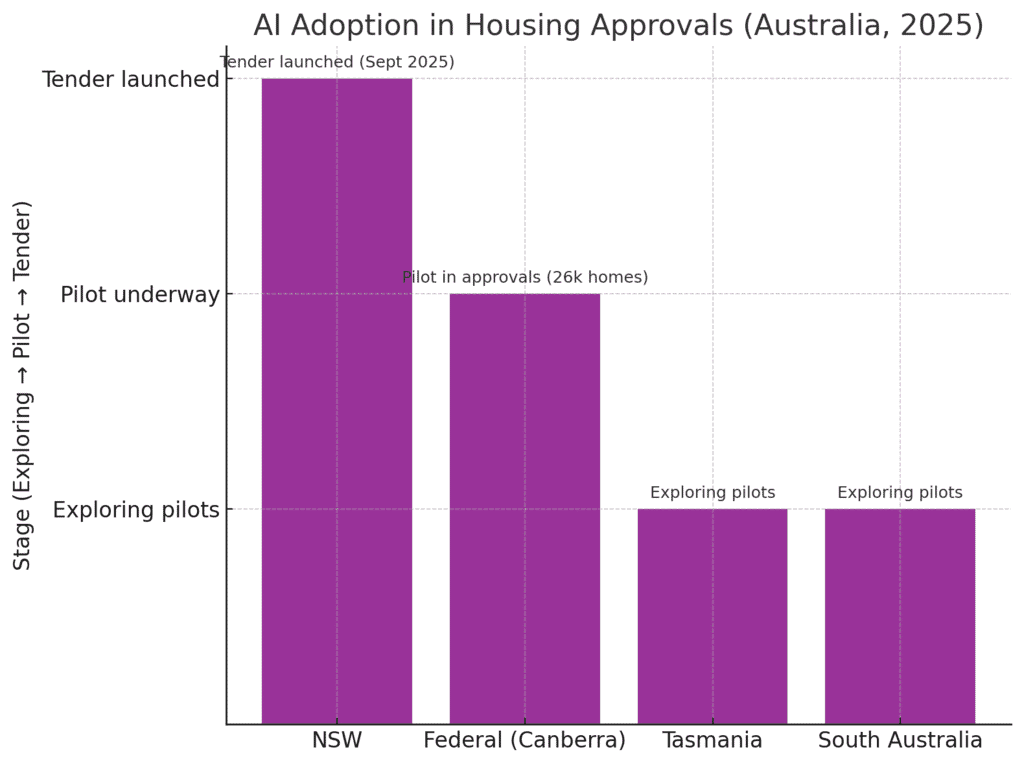
Governments are racing to use artificial intelligence (AI) to speed up housing approvals. In September 2025 the NSW government launched a tender for an AI system to review major development applications, a move labelled a “gamechanger” by planning minister Paul Scully. Federal Treasurer Jim Chalmers has since urged other states to follow suit. The goal is to cut red tape: for example, Canberra plans to fast-track the assessment of more than 26,000 homes currently held up by environmental approvals and is “piloting AI to simplify and speed up assessments”.Tasmanian and South Australian authorities are also exploring AI pilots in planning.
However, experts warn that this policy is no quick fix. Planning is more than ticking boxes: it involves site visits, design judgements and local consultation. Critics note that selling AI as a silver bullet risks “distracting from deeper systemic issues such as labour market bottlenecks… and shrinking social and affordable housing”. They recall the Robodebt welfare fiasco as a cautionary tale: an automated approach once claimed to improve efficiency but instead caused a $4.7 billion blowout and massive hardship. In other words, AI may help clear the paperwork backlog in time, but it won’t magically build homes or fix rising costs and supply shortages.
What this means for buyers
For property buyers and investors, the takeaway is that supply will stay tight in the short term. Delays in approvals mean fewer new homes coming to market this year and next, so competition on existing listings remains intense. Key pointers home seekers and investors need to keep in mind:
- Fewer new homes in a tighter market. An approvals backlog means less fresh supply in well-developed suburbs. Expect bidding wars and limited choice on resale houses for the time being.
- AI won’t deliver houses tomorrow. Even once the system is live, construction must still be finished. So competition is unlikely to let up anytime soon.
- Target established hotspots. It’s important to focus on suburbs that have strong demand but limited stock, rather than waiting for future estates. Because areas that are close to amenities and transport often hold value.
- Use off‑market opportunities. Buyer’s agents can uncover private listings or pre-market deals that avoid auctions. This can be crucial when inventory is low.
- Consider smaller dwellings. With affordability under pressure, units, townhouses and apartments often stay more attainable than stand-alone houses. They can be good for first‑home buyers or investors targeting rental demand.
- Stay flexible: policy is experimental. Initiatives like AI in planning are trial-and-error. The end outcome is uncertain. Having a clear buying plan and trusting expert advice is more important than hoping for quick legislative fixes.
Australia’s housing woes extend beyond planning delays. Affordability, construction costs and labour shortages also play big roles. So while faster approvals are welcome, home‑buyers should have a grounded strategy. As buyer’s agents, at Investmate, we believe in helping clients navigate uncertainty – identifying realistic opportunities today, and making smart decisions for the long term.Ready to make your move?Investmate is ready to help you with a personalized buying strategy as per your requirements. Call us at +61 421 942 049 or book a free consultation. Feel free to contact us if you also wish to secure the right property in a tight market.