

The Reserve Bank of Australia’s (RBA) recent monetary policy decisions have sent quite a clear signal to the market: an easing cycle is well underway. For property owners, aspiring first-home buyers, and investors, this shift from rate hikes to rate cuts is a pivotal moment with profound implications for the Australian property landscape. The RBA’s recent decisions highlight a cautious approach, primarily balancing a moderating inflation outlook with global economic uncertainties in some way. As of the July 2025 media release, the RBA Board opted to leave the cash rate target unchanged at 3.85 percent. The RBA noted that, while inflation has fallen substantially from its 2022 peak, it is waiting for further information to confirm that inflation is on track to sustainably return to the 2.5 percent target. This strategic shift is designed to stimulate economic growth and support the labor market, but its most direct impact is felt in the housing sector.
The market’s anticipation of further rate cuts is one of the major factors influencing sentiment, as an easing cycle is widely expected to stimulate both demand and activity in the property market. Timely, it links cash-rate outlook to investor moves & affordability. At Investmate, we believe understanding this transition is very important for making informed financial decisions, whether you’re looking to secure your first home, refinance an existing loan, or expand your investment portfolio.
Impact on Prices and Borrowing Power for First Home Buyers
The easing of monetary policy is greatly expected to act as a tailwind for Australia’s property market. When the cost of borrowing decreases, more buyers can enter the market, and existing homeowners may be encouraged to refinance or upgrade. This increased demand can put upward pressure on property prices, particularly in popular metropolitan and regional areas. For those with existing mortgages, a rate cut means lower monthly repayments, freeing up cash flow in a manner that can be used for savings, investments, or discretionary spending. This directly enhances household borrowing power, making it possible to qualify for larger loans and, in turn, purchase higher-value properties.
However, the impacts extend beyond just property values. The rental market is also significantly linked to interest rates. As interest rates fall substantially, property investors may find it much more attractive to purchase new assets, which could increase the supply of rental properties over time. In contrast, a reduction in mortgage costs could allow some renters to transition into homeownership, potentially easing demand in the rental market.
Government Initiatives for First Home Buyers
Government policies have a major influence on the housing market, working in concert with or sometimes against monetary policy. The government recently announced an expansion of the Home Guarantee Scheme. Therefore, this initiative is designed to help more Australians enter the property market sooner in some manner by providing a government guarantee on a portion of a first home buyer’s loan, allowing them to purchase with as little as a 5% deposit and avoid the cost of Lenders Mortgage Insurance (LMI).
Key aspects of the expanded scheme include:
- No Caps on Places: The scheme will be open to all eligible first home buyers, without the previous yearly limits on participants.
- No Income Limits: This change greatly allows more Australians to qualify for the scheme, regardless of their income level.
- Higher Property Price Caps: The price caps for properties will be increased to align with average house prices in different regions, giving buyers access to a wider variety of homes.
- Significant Savings: The government estimates that first home buyers using the scheme could save years on their deposit-saving time as well as avoid tens of thousands of dollars in LMI costs.
What an Easing Cycle Means for Potential Buyers:
- For Homeowners: The easing cycle is a prime opportunity to refinance. As a result, with interest rates falling, you may be able to secure a lower rate, significantly reducing your monthly mortgage repayments and potentially saving tens of thousands of dollars over the life of your loan. A lower rate can also help you pay off your loan faster, strictly building equity at an accelerated pace.
- For First-Home Buyers: Lower interest rates basically increase your borrowing capacity, meaning you can afford to borrow more and have a wider selection of properties to choose from. Combined with the government’s 5% deposit scheme, this is one of the most favorable environments in recent years to enter the market.
- For Investors: The market’s renewed momentum, simply coupled with a moderating rental growth rate, presents a balanced opportunity. The easing cycle may lead to increased capital growth, while the rental market remains tight enough to make certain solid yields. This environment is ideal for strategic portfolio expansion.
Statistical Overview: Australia’s Market Dynamics
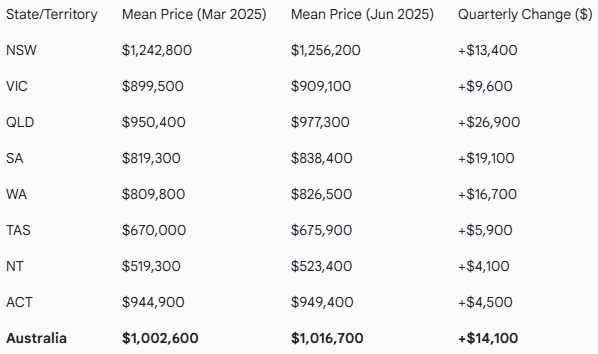
Source: Australian Bureau of Statistics
The data indicates a clear recovery and renewed momentum in the housing market, strictly driven by a combination of factors, including a more stable interest rate environment and government policies designed to support homeownership.
Final Thoughts:
RBA’s easing cycle has the potential to reshape the financial landscape for Australians. With market conditions constantly evolving, securing professional guidance is more important than ever.Call now at+61-421-942-049 or book your free consultation callwithInvestmate proficiently seasoned professionals and discuss how an easing cycle could impact your property and financial future. From understanding the impact of RBA decisions on your mortgage to identifying the right investment opportunities, we are here to support you every step of the way.